





Oil Change Intervals Explained: How Long Is Too Long?
If you have ever driven past your oil change reminder and asked yourself how long can my car go without an oil change, you are definitely not alone. Millions of American drivers push this service back every year. Life gets busy, and an oil change feels easy to put off. The truth is, missing it by a little will not instantly ruin your engine. But the longer you wait, the closer you get to a repair bill that costs far more than a simple oil change ever would.
This guide gives you straight, easy-to-understand answers based on your oil type, your vehicle, and how you actually drive.
Key Takeaways
- Most modern vehicles using full synthetic oil can safely go 7,500–10,000 miles between oil changes, while conventional oil typically requires service every 3,000–5,000 miles.
- Severe driving conditions such as short trips, stop-and-go traffic, towing, extreme temperatures, and dusty roads require more frequent oil changes than standard schedules.
- Delaying an oil change for too long can lead to sludge buildup, increased engine wear, reduced fuel economy, overheating, and potentially catastrophic engine damage.
- Oil degrades over time even when a vehicle is not driven, so most vehicles should receive an oil change at least once every 6–12 months regardless of mileage.
- Regularly checking your oil level, following your vehicle’s Oil Life Monitoring System, and using the manufacturer-recommended oil type are the best ways to maximize engine performance and longevity.
How Long Can An Automobile Go Between Oil Changes?

Most modern cars running full synthetic oil can safely go 7,500 to 10,000 miles between oil changes. Vehicles using conventional oil should stay within 3,000 to 5,000 miles. If your car has been sitting unused, the oil should still be changed every 6 to 12 months regardless of mileage. Always check your owner’s manual first, as your manufacturer’s guidance takes priority over any general rule.
How Often Should You Change Your Oil?
The right oil change interval depends on three things: the type of oil in your car, how and where you drive, and what your vehicle manufacturer recommends.
Here is a simple breakdown:
| Oil Type | Recommended Interval | Severe Driving Interval | Best For |
| Conventional Oil | 3,000 – 5,000 miles | 3,000 miles | Older vehicles, tighter budgets |
| Synthetic Blend Oil | 5,000 – 7,500 miles | 3,750 – 5,000 miles | Daily commuters, mixed driving |
| Full Synthetic Oil | 7,500 – 10,000 miles | 5,000 – 7,500 miles | New vehicles, highway driving |
| High-Mileage Synthetic | 5,000 – 7,500 miles | 3,000 – 5,000 miles | Vehicles over 75,000 miles |
Most vehicles built after 2010 come factory-filled with full synthetic oil and are built for longer intervals. Older vehicles, particularly those made before 2000, may still need the traditional 3,000-mile schedule with conventional oil.
You can look at How to Change Oil in Your Car: Step-by-Step Guide if you’re willing to try changing your car’s oil by yourself.
What Counts as Severe Driving? You May Be Surprised
Many drivers assume the longer interval applies to them. But severe driving conditions are more common in the United States than most people realize. Your vehicle is under severe service if you regularly do any of the following:
- Take mostly short trips under 5 miles
- Drive in heavy stop-and-go traffic during rush hour
- Operate in extreme heat or cold temperatures
- Tow trailers, boats, or haul heavy cargo
- Drive often on dusty or unpaved roads
- Allow your vehicle to sit idle for extended periods
If two or more of these apply to your daily routine, use the shorter oil change interval. It is a small cost that protects a very large investment.
What Happens If You Skip an Oil Change?
Oil does not last forever inside your engine. Over time and miles, it breaks down and loses its ability to lubricate metal parts, control engine temperature, and flush out dirt and debris. Here is what happens at each stage of neglect:
| Miles Overdue | What Happens Inside the Engine | Risk Level |
| 500 – 1,000 miles over | Oil begins to thin and lose its protective additives | Low |
| 1,000 – 3,000 miles over | Sludge starts forming; metal-on-metal friction increases | Moderate |
| 3,000 – 5,000 miles over | Sludge builds up significantly; oil filter may clog; engine runs hotter | High |
| 5,000+ miles over | Risk of engine seizure, blown gaskets, or complete engine failure | Very High |
Engine repairs after serious oil neglect can run from a few hundred dollars for a flush to several thousand dollars for a full engine rebuild or replacement. A routine oil change costs a fraction of that.
How Long Can Oil Sit in a Car Without Driving?
Here is something many drivers overlook: oil degrades with time, not just with mileage. If your car sits in a garage for months, the oil still breaks down through oxidation and moisture contamination.
- Conventional oil sitting unused: Change after 6 months, even with low mileage
- Full synthetic oil sitting unused: Change after 12 months at the most
- Long-term vehicle storage: Always change the oil before putting the car back on the road
This matters for seasonal drivers, classic car owners, and anyone with a second vehicle that mostly sits. If your car has not been driven in months, check the oil before your next trip.
Warning Signs Your Car Needs an Oil Change Right Now
Your car is usually good at sending signals when something needs attention. Watch for these:
- The oil change indicator light or check engine light has come on
- Oil on the dipstick looks dark, gritty, or black instead of clear amber
- Your engine is louder than usual or making a knocking or ticking sound
- You smell burning oil coming from the engine bay
- Your fuel economy has dropped noticeably over the past few weeks
- You see darker smoke coming from your exhaust
Any one of these signs means it is time to schedule service immediately, not next week.
Spotting even one of these signs means your oil is likely past its useful life. On most Chevrolet and GMC vehicles, the Oil Life Monitoring System is the most reliable guide, since it tracks engine revolutions, operating temperature, and driving conditions rather than relying on a fixed mileage count. If the monitor is near zero or the oil looks dark and gritty, it’s time to book oil change service in LaGrange using the dexos-approved oil your engine was designed for.
What Chevrolet and GMC Recommend for Your Vehicle
If you drive a Chevy or GMC, modern vehicles come equipped with the Oil Life Monitoring System (OLM). This system calculates your remaining oil life based on your actual driving habits, not just mileage. It accounts for engine temperature, load, speed, and operating time.
Here is how to read it:
- 40% or below: Start planning your next oil change
- 15% or lower: Schedule the service as soon as possible
- 0%: The oil has exceeded its useful life and needs to be changed immediately
Chevrolet and GMC recommend Dexos-approved full synthetic oil for most of their modern engines. Using the correct oil type matters just as much as staying on the right interval.
Ready to schedule? Our team at Auto Gallery Chevy GMC offers certified oil change service for all Chevy and GMC models. Book your certified oil change here.
How to Check Your Oil at Home in Under 2 Minutes
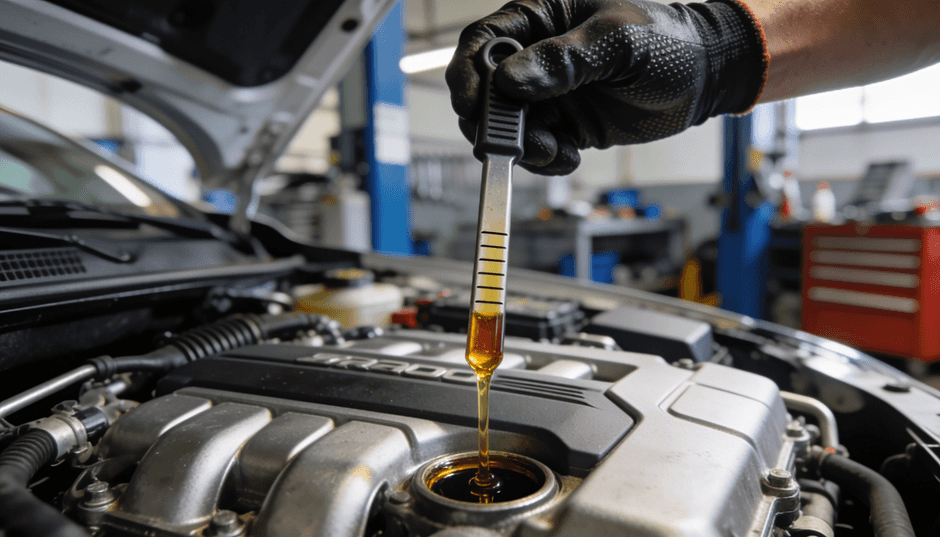
You do not need to be a mechanic to stay on top of your oil. Here is how:
- Park on level ground and let the engine cool for at least 10 minutes
- Open the hood and find the oil dipstick, usually marked with a yellow or orange handle
- Pull it out, wipe it clean with a cloth, and reinsert it fully
- Pull it out again and check where the oil sits between the MIN and MAX markers
- Look at the color: clear amber is healthy, dark brown or black means it is time for a change
Checking your oil once a month takes two minutes and can prevent thousands of dollars in engine repairs. Make it a habit.
Is It Safe to Drive When the Oil Change Light Comes On?
There are two different lights to know here, and they are not the same thing.
The oil change reminder light means you have entered the window where service is recommended. It is not an emergency in the first few hundred miles, but do not ignore it for more than a week or two.
The oil pressure warning light is a completely different situation. If that red light comes on while you are driving, pull over safely and shut off the engine as soon as possible. Driving with low or no oil pressure can destroy your engine in a matter of minutes.
Not sure which service your Chevy or GMC needs right now? Visit our full service center here and our certified technicians will walk you through it.
Oil Change Tips That Help Your Engine Last Longer
- Always use the oil viscosity grade listed in your owner’s manual
- Never skip the oil filter replacement when you change the oil
- Keep a simple log of every oil change with the date, mileage, and oil type
- For Chevy and GMC vehicles, use Dexos-approved full synthetic for best protection
- If you purchase a used vehicle, change the oil before extensive driving
- Set a phone calendar reminder as a backup to any dashboard alerts
Common Oil Change Myths You Should Stop Believing
| The Myth | The Truth |
| You must change oil every 3,000 miles | Most modern vehicles on synthetic oil can safely go 7,500 to 10,000 miles |
| Dark oil always means it needs changing | Oil darkens naturally as it works; check mileage and viscosity, not just color alone |
| You can skip the filter if the oil looks fine | The filter traps contaminants; replace it with every oil change without exception |
| Synthetic oil causes leaks in older engines | Modern synthetic oil is safe for most vehicles; verify with your owner’s manual |
| You can just top off instead of changing | Topping off does not remove old, contaminated oil; a full change is always necessary |
Owners who prefer to handle maintenance themselves can follow our step-by-step Silverado 1500 oil change guide, which covers oil type, capacity, and filter replacement for that truck.
Before you book, check the current service and parts specials, since oil change offers are among the most frequent discounts.
Keep Your Engine Protected with the Right Schedule
Your engine is the most expensive component in your vehicle. Protecting it does not require complicated knowledge or a large budget. It just requires staying on schedule with regular oil changes using the right oil for your specific car.
Whether you drive a brand-new Chevy Silverado, a well-loved older GMC Sierra or any other vehicle, the principles are the same: check your oil regularly, use the manufacturer-recommended oil type, and do not let convenience push you past your service interval.
You should prefer a certified service team and dealer and verified service station, parts to keep your vehicle running at its best.
Frequently Asked Questions
How long can my car go without an oil change?
Most cars using full synthetic oil can safely go 7,500 to 10,000 miles between changes. Vehicles on conventional oil should stay within 3,000 to 5,000 miles. Always follow your vehicle manufacturer’s specific recommendation for your model and driving conditions.
How long can you go overdue on an oil change?
Going 500 to 1,000 miles past your interval is generally low risk if you are using synthetic oil. Beyond 3,000 miles overdue, sludge buildup and engine wear become a real concern. Do not make a habit of running past your service interval, even by small amounts.
How long will a car last without oil?
A running engine with no oil can seize within 15 to 30 minutes. Even critically low oil levels cause rapid metal-on-metal wear that compounds with every mile. Oil is not optional; without it, engine failure is fast and usually permanent.
Can I still drive my car if it says oil change required?
Yes, for a short time. The oil change required message is a scheduled maintenance reminder, not an emergency warning. You typically have a few hundred miles of safe margin. However, do not delay more than a week or two after seeing this message appear.
Is 10,000 km too long for an oil change?
10,000 km equals approximately 6,200 miles. For vehicles running full synthetic oil under normal driving conditions, this falls within the acceptable range. For conventional oil or severe driving conditions like heavy traffic or short trips, this interval is too long and you should change sooner.
What happens if I go 2 years without an oil change?
Two years without an oil change means your oil has severely degraded through oxidation and contamination, regardless of mileage. Sludge buildup inside the engine is almost certain. Have the oil changed immediately and ask your service technician about an engine flush to remove built-up deposits.
Does oil type really affect how long I can wait between changes?
Yes, significantly. Full synthetic oil is engineered to last longer, resist breakdown under high heat, and protect better during cold starts. Conventional oil degrades faster and needs to be changed more frequently, especially in older vehicles or those driven under demanding conditions.
How do I know if my car uses synthetic or conventional oil?
Check your owner’s manual under the maintenance schedule or fluid specifications section. The oil filler cap on your engine sometimes shows the recommended oil grade as well. Your dealer or certified service center can also confirm the right oil type for your specific vehicle.

0 comment(s) so far on Oil Change Intervals Explained: How Long Is Too Long?