





How to Know If Your Car Needs an Oil Change
Most drivers only think about oil when a warning light comes on. By that point, the engine has already been working with degraded oil for longer than it should. The good news is your car gives you several signals well before anything serious happens. You just need to know what to look for.
This guide walks you through every warning sign that tells you how to know if your car needs an oil change, how to check the oil yourself in under two minutes, and what happens if you keep ignoring it.
Key Takeaways
- Recognize the warning signs early. Dark or gritty oil, unusual engine noises, burning oil smells, blue exhaust smoke, poor fuel economy, and dashboard oil warnings all indicate it’s time for an oil change.
- Check your engine oil regularly. A quick dipstick inspection every 500 to 1,000 miles or every other fuel fill-up can help catch low or deteriorated oil before it leads to costly engine damage.
- Follow your vehicle’s recommended oil change interval. Most modern vehicles using full synthetic oil require changes every 7,500 to 10,000 miles or at least once every 12 months, depending on driving conditions and the owner’s manual.
- Don’t rely solely on the oil life monitor. While modern monitoring systems estimate oil life based on driving conditions, they cannot detect low oil levels, leaks, or excessive oil consumption.
- Routine oil changes protect your engine and save money. Replacing engine oil on time reduces friction, improves fuel efficiency, prevents sludge buildup, extends engine life, and helps avoid expensive repairs.
What Does Engine Oil Actually Do?
Before getting into the signs, it helps to understand why oil matters so much. Engine oil does four things at once:
- Lubricates hundreds of moving metal parts so they do not grind against each other
- Carries heat away from the combustion chamber and bearings
- Suspends dirt, carbon, and tiny debris particles and sends them to the oil filter
- Neutralizes acids that form during combustion
As oil ages, it stops doing all four jobs well. It gets thicker, darker, and less effective. The longer it stays in your engine past its useful life, the more wear it allows to happen.
8 Signs Your Car Needs an Oil Change
1. The Oil Change or Check Engine Light Comes On
This is the most direct signal your car can give you. Most modern vehicles have a dedicated oil change reminder light, often shaped like an oil can. Some vehicles display a written message like “Change Engine Oil Soon” in the driver information center.
If the oil pressure warning light (usually red) turns on, that is more urgent. It can mean the oil level has dropped dangerously low or the pump is failing. Pull over safely and check the oil level immediately if that one appears.
Do not assume the light is a glitch. Take it seriously every time.
2. Engine Makes Ticking, Knocking, or Rumbling Noises
Fresh oil keeps a thin film of lubrication between all moving engine parts. When oil breaks down or the level drops, that protective film weakens. Metal components start making contact with each other and you will hear it.
Common sounds include:
- A ticking or tapping at startup that fades as the engine warms up (lifter noise)
- A knocking or rumbling sound that gets louder under acceleration (bearing wear)
- A grinding noise at idle (severe oil starvation)
These sounds are your engine’s way of saying it is not getting the lubrication it needs. Do not wait. Schedule an oil change as soon as possible.
3. The Oil on Your Dipstick Looks Dark or Gritty
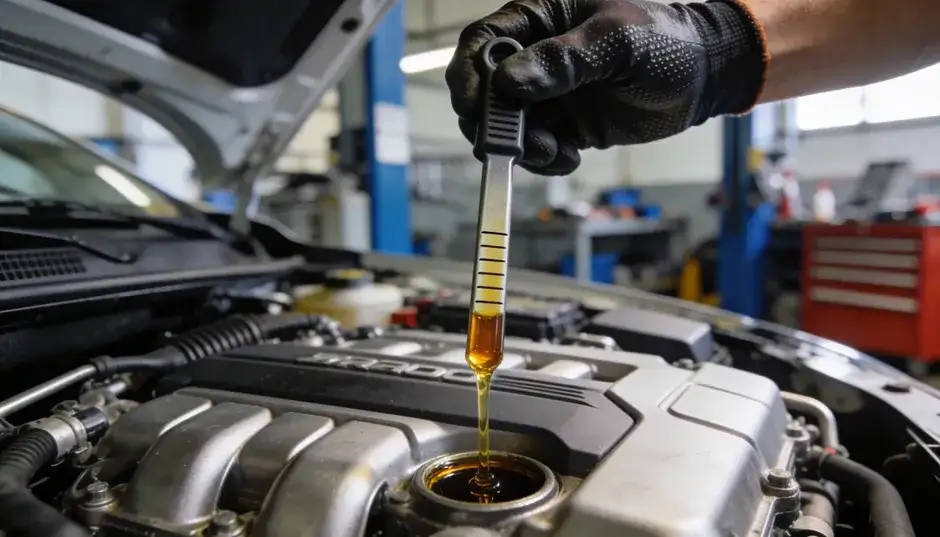
This is the easiest check you can do at home and it takes about 90 seconds.
How to check your oil:
- Park on a flat surface and turn the engine off. Wait 5 minutes for the oil to settle.
- Pop the hood and find the dipstick (usually has a yellow or orange ring).
- Pull it out, wipe it clean with a rag, reinsert it fully, then pull it out again.
- Look at the oil on the tip.
What you are looking for:
| Oil Condition | Color | What It Means |
| Healthy oil | Amber or light brown, clear | Good, no action needed yet |
| Aging oil | Dark brown, still somewhat fluid | Approaching change time |
| Overdue oil | Black, thick, gritty | Change immediately |
| Concerning oil | Light milky or foamy | Possible coolant leak, see a mechanic |
If the oil looks black and has visible grit in it, that oil is no longer protecting your engine the way it should.
4. You Smell Burning Oil Inside the Cabin
A sharp, acrid burning smell inside the car while driving almost always points to one of two things: old oil that has broken down and is burning off on hot engine parts, or an oil leak dripping onto the exhaust system or other hot surfaces.
Either way, it is not something to ignore. If the smell is accompanied by smoke coming from under the hood, pull over and have the car inspected before driving further.
5. You See Blue or Gray Smoke from the Exhaust
A small amount of white vapor from the tailpipe on a cold morning is normal. Blue or gray smoke, especially when it persists after the engine has warmed up, is not.
Blue smoke typically means oil is burning inside the combustion chamber. This can happen when oil leaks past worn seals or rings and gets into the cylinders. Degraded oil is thinner and more likely to slip past these seals than fresh oil. If you see blue smoke regularly, get the car inspected alongside an oil change.
6. Your Fuel Economy Has Dropped Noticeably
This one surprises many drivers. When oil gets thick and dirty, it creates more friction inside the engine. More friction means the engine has to work harder to do the same job, and it burns more fuel as a result.
If you have noticed you are filling up more often than usual and nothing else about your driving has changed, check when you last had an oil change. Fresh oil reduces internal friction, which helps the engine run more efficiently.
7. You Feel a Rough Idle or Reduced Performance
Does the car feel slightly sluggish when accelerating? Does it vibrate more than usual at a stoplight? Dirty or insufficient oil affects the smooth operation of components like variable valve timing systems, which rely on clean oil pressure to function correctly.
Turbocharged engines are especially sensitive to oil quality. A turbocharger spins at tens of thousands of RPM and requires a constant supply of clean, properly flowing oil. Old oil can restrict flow and cause turbo wear that leads to expensive repairs.
8. You Have Exceeded the Recommended Mileage or Time Limit
Sometimes there are no symptoms at all. The engine sounds fine, the oil light has not come on, and the car drives normally. But if you check your records and realize you are past the recommended service interval, that is reason enough to schedule an oil change.
Many automakers have now moved to oil change intervals at 7,500 or even 10,000 miles, and the old “every 3,000 miles” rule no longer applies to most modern vehicles with full synthetic oil. That said, time matters just as much as mileage. Oil degrades from oxidation and moisture even when the car is parked. If your last oil change was over 12 months ago, change it regardless of the mileage.
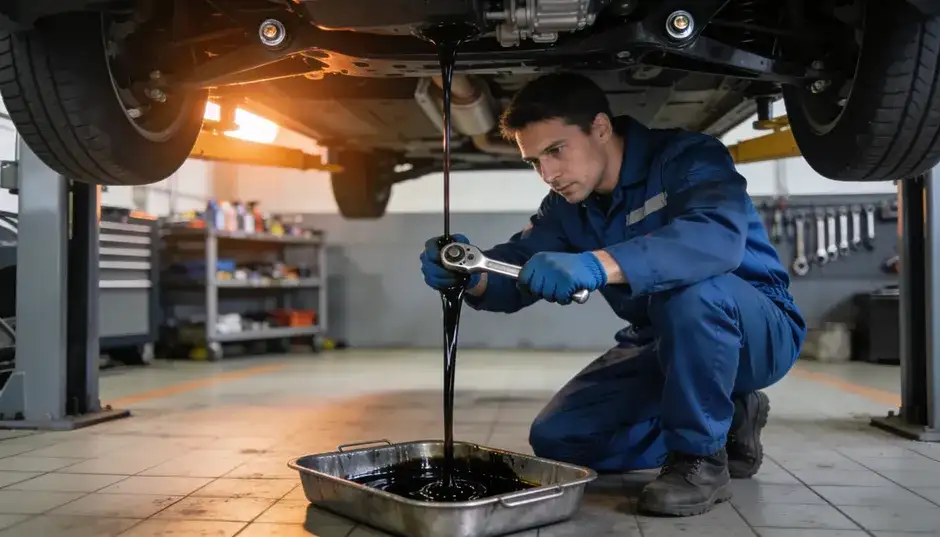
Oil Change Intervals: Quick Reference Guide
| Oil Type | Recommended Interval | Best For |
| Conventional | Every 3,000 to 5,000 miles | Older engines, basic commuters |
| Synthetic Blend | Every 5,000 to 7,500 miles | Mixed driving conditions |
| Full Synthetic | Every 7,500 to 10,000 miles | Most new cars, turbos, performance engines |
| Time-based rule | Every 12 months | Low-mileage or infrequent drivers |
Always confirm the interval for your specific vehicle in the owner’s manual. If you drive under conditions like frequent short trips, towing, extreme heat or cold, or stop-and-go city traffic, you fall under what manufacturers call “severe service.” That means you should change oil closer to the shorter end of the range.
For a deeper walkthrough of the process itself, check out this guide on how to change oil in your car from the Auto Gallery team.
A Sign Most Drivers Miss: The Oil Level Drop Between Changes
Here is something almost no blog talks about: engine oil does not just degrade, it can also disappear.
A healthy engine should consume very little oil between changes. But many engines, particularly those with higher mileage, turbocharged setups, or certain design characteristics, can burn small amounts of oil regularly without showing any visible smoke or symptoms.
If you never check the dipstick between oil changes, you might be running on a quart or more low without realizing it. Low oil volume means the remaining oil has to work harder, overheats faster, and loses its protective properties much sooner than it otherwise would.
Make it a habit: Check the dipstick every other time you fill your gas tank. It takes 90 seconds and can save you thousands in engine repairs.
What Happens If You Keep Skipping Oil Changes?
Ignoring oil change signs does not just mean a rough ride. The consequences build up progressively:
Short term (a few thousand miles overdue): Oil additives deplete, friction increases slightly, fuel economy drops.
Medium term (significantly overdue): Sludge begins forming. Oil passages can partially clog. Engine components start showing wear.
Long term (severely neglected): Sludge builds, oil pressure drops, parts overheat, bearings wear, and eventually the engine can seize. Replacement engines often cost $4,000 or more on many vehicles.
An oil change costs a small fraction of any of those outcomes. Staying on schedule is the single most affordable thing you can do to extend the life of your car.
How Your Car’s Oil Life Monitor Works (And When Not to Trust It Alone)
Most vehicles made in the last decade have an onboard oil life monitoring system. This system uses a software algorithm to track engine load, temperature cycles, RPM, and drive cycles to estimate how much useful life your oil has left. It is more accurate than a simple mileage sticker.
However, these systems are not perfect. They do not physically sense oil conditions. They estimate it. If your oil level is low, if you have a slow leak, or if your engine is burning oil, the monitor will not catch those issues. That is why physically checking the dipstick between oil changes is still important, even if your car has a smart monitoring system.
Keep Your Engine Healthy with Scheduled Service
Knowing how to tell if your car needs an oil change puts you ahead of most drivers on the road. The warning signs, engine sounds, dipstick color, and mileage records all tell a story. The key is actually paying attention to them.
If you are overdue or unsure about your car’s oil condition, the certified technicians at Auto Gallery Chevy GMC can check your oil, recommend the right product for your engine, and get you back on the road quickly. You can also browse their full range of maintenance services at the Auto Gallery service center to stay on top of everything your vehicle needs.
Frequently Asked Questions
How do I know if my car needs an oil change without a light?
Check the dipstick. Pull it out, wipe it clean, reinsert it, and pull it out again. Healthy oil is amber and clear. If it is black, thick, or gritty, the oil needs to be changed. You can also check when your last service was recorded. If it has been more than 5,000 miles or 12 months, schedule a change regardless of how the car drives.
How do you tell if a car needs an oil change by the sound?
A ticking or tapping noise at startup that fades once the engine warms up is a common sign of oil that is too old or too low to properly lubricate the valve train. A deeper knocking or rumbling noise, especially under acceleration, points to bearing wear from poor lubrication. Both sounds mean you should get an oil change checked out right away.
What happens if you don’t change your car oil for a long time?
The oil breaks down, loses its lubricating properties, and turns into sludge. That sludge can clog oil passages and starve engine parts of lubrication. Over time this causes increased friction, overheating, accelerated wear on bearings and other components, and in severe cases, complete engine seizure. The longer oil goes unchanged past its service life, the more cumulative damage builds up.
How often should I check my oil between changes?
A good habit is to check it every other time you fill your gas tank, roughly every 500 to 1,000 miles. This takes under two minutes with a dipstick check. It lets you catch a low oil level or unusual oil condition early, before it causes engine damage. Even if your car has an oil life monitor on the dashboard, a physical dipstick check is still worth doing.
Can I drive with the oil change light on?
Yes, briefly, but you should not put it off. The oil change reminder light means service is due, not that the engine is in immediate danger. However, if the oil pressure warning light (usually red) comes on, that is different. Stop driving as soon as it is safe to do so and check the oil level. Driving with low oil pressure can cause serious engine damage within minutes.
For expert oil change service on Chevy and GMC vehicles, visit Certified Service Center.

0 comment(s) so far on How to Know If Your Car Needs an Oil Change