





How to Change the Oil in Your 2026 Chevy Colorado
If you’re searching for a clear, reliable walkthrough for your 2026 Chevy Colorado oil change, you’re in the right place. The Colorado’s 2.7L TurboMax engine is one of the most capable four-cylinders in the midsize truck segment : 310 horsepower, 430 lb-ft of torque, and the low-end grunt of an engine far larger. But all that performance comes with a simple requirement: clean, correctly specified oil changed on schedule. You can also read about the general process about how to change the oil in your car step by step to understand the basics things to be done.
This guide covers everything you need for a complete Chevy Colorado oil change at home: the exact oil type and capacity for every Colorado engine, the tools to gather beforehand, six clear steps, the factory-recommended interval and full maintenance schedule, and answers to the questions Colorado owners ask most. Prefer to leave it to a professional? Our certified service oil change team can have you back on the road in under an hour.
The 2026 Chevy Colorado’s 2.7L TurboMax requires Full Synthetic SAE 5W-30 oil certified to GM’s dexos1 Gen 3 standard. It holds 6 quarts with a filter change. GM recommends following the Oil Life Monitor, with a typical interval of every 7,500 miles under normal driving conditions.
Key Takeaways
- Correct Oil Required: Use SAE 5W-30 Full Synthetic oil meeting GM dexos1 Gen 3 specifications.
- Oil Capacity: The 2026 Colorado’s 2.7L TurboMax engine requires 6 quarts with a filter change.
- Follow Oil Life Monitor: Oil changes are typically needed every 7,500 miles, or 5,000 miles under towing or severe-duty use.
- Turbo Protection Matters: Fresh dexos1 Gen 3 oil helps prevent LSPI, reduces turbo wear, and maintains engine performance.
- Avoid Common Errors: Using non-certified oil, overfilling, or skipping the Oil Life Monitor reset can impact reliability and warranty coverage.
Why a Chevy Colorado Oil Change Matters More Than You Think

The 2.7L TurboMax isn’t just another four-cylinder. It runs a turbocharger spinning at extreme RPM to generate torque that rivals much larger V6 and V8 engines. That means oil is doing double duty: lubricating the engine’s pistons, bearings, and valvetrain while simultaneously cooling the turbocharger’s bearing cartridge, which operates at temperatures that would destroy conventional oil within miles.
If oil breaks down under that load, it leaves behind heat-baked deposits : often called “coking” : inside the turbo’s oil feed lines. Restricted flow means the turbocharger runs hotter, wears faster, and eventually fails. A turbocharger replacement on a modern truck is an expensive repair that a routine Chevy Colorado oil change can prevent entirely. Staying current also protects your warranty coverage, since GM’s dexos1 Gen 3 specification is tied to warranty compliance on turbocharged engines.
2026 Chevy Colorado Oil Type : What the Spec Actually Means
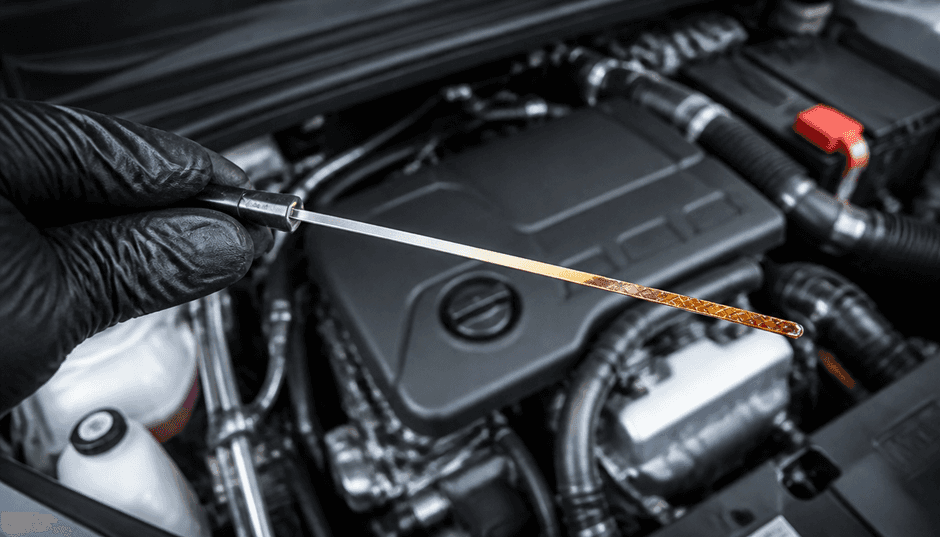
Every 2026 Colorado comes with the 2.7L TurboMax engine and requires Full Synthetic SAE 5W-30 oil certified to GM’s dexos1 Gen 3 standard. That Gen 3 specification isn’t just a marketing label : it’s a formulation requirement specifically designed to prevent Low-Speed Pre-Ignition (LSPI) in modern turbocharged engines like the TurboMax. LSPI is an abnormal combustion event that can cause severe internal engine damage in a single incident, and dexos1 Gen 3-certified oils contain the specific additive packages that suppress it.
The “5W-30” viscosity rating tells you two things: the “5W” indicates strong cold-start flow even in cold overnight temperatures, and the “30” indicates how the oil maintains its protective film at full operating temperature. Do not substitute a different viscosity or a non-dexos1 Gen 3 oil : not even temporarily.
2026 Chevy Colorado Oil Capacity by Engine
The 2026 Colorado is standardized on the 2.7L TurboMax across all trims. The table below also covers previous Colorado engines for owners researching their current vehicle:
| Engine | Configuration | Oil Type | Capacity (with filter) |
| 2.7L TurboMax (2026 standard) | Turbocharged I4 | Full Synthetic 5W-30, dexos1 Gen 3 | 6 quarts |
| 3.6L V6 (prior years) | Naturally Aspirated V6 | Full Synthetic 5W-30, dexos1 | 6 quarts |
| 2.5L 4-Cylinder (prior years) | Naturally Aspirated I4 | Full Synthetic 5W-30, dexos1 | 5 quarts |
| 2.8L Duramax Diesel (prior years) | Turbocharged I4 Diesel | Full Synthetic 5W-30, dexos2 | 6.6 quarts |
Note: For model year 2026, Chevrolet standardized the Colorado lineup on the 2.7L TurboMax. The V6, 2.5L, and Duramax diesel are no longer offered. If you’re on a 2026, you need 6 quarts of dexos1 Gen 3 Full Synthetic 5W-30.
Drain plug torque for the 2.7L TurboMax is approximately 18 ft-lbs (25 Nm). The oil pan on this engine is aluminum : overtightening is the leading cause of stripped pans on this platform, so always use a torque wrench rather than guessing.
You can confirm your exact engine configuration on the 2026 Chevy Colorado model page or check the oil fill cap, which will display the required viscosity directly.
Tools and Materials You’ll Need
- New oil filter (ACDelco PF64 or OE-equivalent for the 2.7L TurboMax)
- 6 quarts of dexos1 Gen 3-certified, Full Synthetic SAE 5W-30 oil
- 15mm socket and ratchet (for drain plug)
- Oil filter wrench
- Oil drain pan (at least 7-quart capacity)
- Funnel
- Shop rags or paper towels
- Nitrile gloves
- Jack and jack stands, or a set of quality drive-up ramps
Step-by-Step: How to Change the Oil in Your 2026 Chevy Colorado
Whether this is your first Chevy Colorado oil change or your tenth, the process breaks down into six manageable steps.
Step 1: Warm the Engine
Park on level ground. If the engine has been sitting overnight, let it idle for 5 minutes so the oil warms slightly : warm oil drains faster and carries more contaminants out with it. Turn off the engine, engage the parking brake, and raise the front of the truck using ramps or a jack and jack stands. Never work beneath a vehicle supported only by a floor jack.
Step 2: Drain the Old Oil
Slide your drain pan under the oil pan. Using a 15mm socket, break the drain plug loose counterclockwise, then finish removing it by hand. Step clear as the old oil begins flowing : it will be hot. Let it drain fully for at least 5 to 10 minutes. Inspect the drain plug washer: if it’s flattened or shows wear, replace it before reinstalling. Torque the plug back to approximately 18 ft-lbs (25 Nm) : firm and accurate, not muscle-tight.
Step 3: Replace the Oil Filter
Reposition the drain pan under the oil filter housing, since trapped oil will spill when the filter is removed. Using your filter wrench, loosen and remove the old filter. Lightly coat the new filter’s rubber gasket with fresh oil : this ensures a clean seal and makes future removal easier. Thread the new filter on by hand until snug, then a quarter-turn more. Do not use the filter wrench to tighten.
Step 4: Add Fresh Oil
Remove the oil fill cap on top of the engine and, using your funnel, pour in approximately 5.5 quarts of dexos1 Gen 3 Full Synthetic 5W-30 : slightly below the full 6-quart capacity to leave room for fine-tuning. Replace the cap, start the engine, and let it run for about 60 seconds to push oil through the new filter and pressurize all oil passages.
Step 5: Check the Level and Top Off
Shut off the engine and wait 2 to 3 minutes for the oil to settle back into the pan. Pull the dipstick, wipe it clean, reinsert it fully, then pull it again for a clean reading. Top off in small increments until the level sits between the minimum and maximum marks. Overfilling the TurboMax by even half a quart can cause oil aeration, which reduces lubrication effectiveness at highway speed and under load.
Step 6: Reset the Oil Life Monitor
On most 2026 Colorado models, open the Driver Information Center, navigate to the Vehicle menu, select Oil Life, then Reset, and confirm. The system recalculates from 100% and will now track your fresh oil accurately based on real driving inputs : temperature, RPM, load, and trip length. Skipping this step means the monitor won’t reflect your actual oil age.
If you’d rather skip the driveway and trust a trained technician, a certified Colorado oil change service includes the full procedure, proper disposal, and a multi-point inspection.
2026 Chevy Colorado Oil Change Interval
The Oil Life Monitor on the 2026 Colorado does something a fixed mileage sticker can’t: it accounts for how you actually drive. Towing a trailer in summer heat at full load burns through oil faster than a quiet highway commute. The monitor weighs all of that in real time.
| Driving Condition | Recommended Interval |
| Normal daily driving | Every 7,500 miles / 6 months (or per Oil Life Monitor) |
| Towing, hauling, off-road, or extreme heat | Every 5,000 miles or sooner |
| Time-based maximum (regardless of mileage) | Every 12 months |
If your dashboard indicator drops below 10%, don’t wait to schedule service : particularly if you tow or run the truck hard. The dexos1 Gen 3 additive package that suppresses LSPI degrades over time, and once it’s gone, no mileage figure protects you.
Full Factory-Recommended Maintenance Schedule
An oil change is your most frequent service touchpoint, but it fits into a broader factory schedule designed to keep the Colorado running reliably for the long haul.
| Interval | Service Tasks |
| Every 7,500 miles / 6 months | Oil and filter change, tire rotation, brake inspection, fluid level check |
| Every 15,000 miles / 12 months | Replace engine air filter (if needed), inspect suspension, inspect exhaust |
| Every 22,500 miles | Replace cabin air filter |
| Every 30,000 miles / 24 months | Inspect cooling system, hoses, and belts; replace transmission fluid (if severe duty) |
| Every 45,000 miles | Inspect brake fluid, replace as needed; check transfer case fluid (4×4 models) |
| Every 60,000 miles / 48 months | Replace spark plugs, inspect fuel system |
| Every 90,000 miles | Replace timing belt (if equipped), comprehensive inspection |
| Every 150,000 miles | Replace engine coolant |
For any of these intervals, our fullservice department handles factory-compliant service with GM-trained technicians and genuine parts.
Common Mistakes to Avoid
Using any oil that isn’t dexos1 Gen 3 certified can void coverage on the TurboMax and removes the LSPI protection the engine specifically requires. Not all 5W-30 oils carry Gen 3 certification, so check the label before you buy.
Overfilling is a more common mistake than people expect : six quarts sounds like a round number, but always verify with the dipstick rather than going on count alone. Running half a quart over on a turbocharged engine creates foam at high RPM, and foamy oil doesn’t lubricate.
Skipping the Oil Life Monitor reset after a change means your truck will never remind you accurately. And if you drive mostly short trips or do any towing, extending to 7,500 miles on every single change isn’t the right call : let the monitor guide you.
What Other Colorado Owners Are Asking
One of the most common questions is whether the 2026 Colorado still offers a diesel option. It doesn’t : Chevrolet standardized the 2026 lineup on the 2.7L TurboMax only, so every 2026 Colorado owner uses the same 6-quart, dexos1 Gen 3 Full Synthetic 5W-30 specification.
Another frequent question is whether 4WD models need a different oil or a higher capacity than RWD models. The engine oil spec and capacity are identical regardless of drivetrain : 4WD adds a transfer case that has its own separate fluid, checked at the 45,000-mile service interval.
A third common question: does using a premium synthetic brand instead of a GM-branded oil void the warranty? No : any oil meeting the dexos1 Gen 3 specification qualifies, regardless of brand. What matters is the certification on the label, not the label itself.
Keep Your Colorado Running at Full Strength
A properly timed 2026 Chevy Colorado oil change is one of the most cost-effective things you can do for a turbocharged engine. Miss an interval, and the TurboMax pays the price in deposits, accelerated wear, and potential LSPI events. Stay on schedule, and you’re protecting one of the most capable midsize truck engines on the market.
If you’d rather hand it off to a technician, explore our full service department or check our current service and parts specials to save on your next visit.
Frequently Asked Questions
What type of oil does the 2026 Chevy Colorado take?
The 2026 Colorado’s 2.7L TurboMax requires Full Synthetic SAE 5W-30 oil certified to GM’s dexos1 Gen 3 specification. The Gen 3 rating is essential : it contains formulations specifically designed to prevent Low-Speed Pre-Ignition (LSPI) in turbocharged engines.
How many quarts of oil does a 2026 Chevy Colorado need?
The 2.7L TurboMax holds 6 quarts with a filter change. Always verify with the dipstick after filling rather than relying on count alone.
What is the 2026 Chevy Colorado oil change interval?
GM recommends following the Oil Life Monitor, which typically calls for a change around every 7,500 miles under normal driving. If you tow, haul, or drive in extreme heat, plan for 5,000 miles or sooner.
Does the 2026 Colorado still have a diesel engine option?
No. For 2026, Chevrolet standardized the Colorado lineup on the 2.7L TurboMax four-cylinder only. The 2.8L Duramax diesel and the 3.6L V6 are no longer offered.
Can I use conventional oil instead of synthetic in my Colorado?
No. The TurboMax’s turbocharger and its LSPI-suppression requirements make dexos1 Gen 3 full synthetic non-negotiable.

0 comment(s) so far on How to Change the Oil in Your 2026 Chevy Colorado