





Do Electric Cars Need an Oil Change? The Complete EV Owner’s Guide
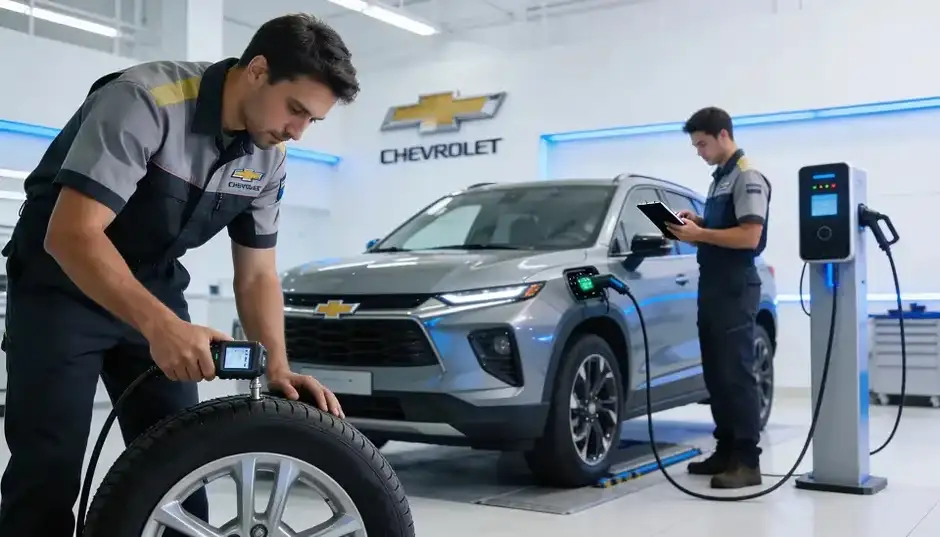
The short answer is no. Electric cars do not need oil changes. But that does not mean they need zero maintenance. If you recently switched to an EV or are thinking about buying one, understanding what your car actually needs, and what it does not, will save you money, prevent surprises, and help your battery and drivetrain last as long as possible.
This guide covers everything an EV owner in the U.S. needs to know: why oil changes are not required, what fluids and systems do need attention, how often to service an EV, and how EV ownership compares to a traditional gas-powered car in terms of maintenance cost and effort.
Key Takeaways
- Electric cars do not need oil changes because they use electric motors instead of internal combustion engines, eliminating the need for engine oil.
- EVs still require regular maintenance, including tire rotations, brake fluid checks, battery coolant service, cabin air filter replacement, and electric drive unit fluid changes.
- GM recommends servicing Chevrolet EVs every 7,500 miles, primarily for tire rotation and a multipoint inspection, with additional maintenance at longer intervals.
- EV owners can save thousands of dollars on maintenance over the vehicle’s lifetime by avoiding oil changes, spark plug replacements, and transmission service.
- Battery care is essential—keeping the charge between 20% and 80%, avoiding prolonged 100% charge, and following manufacturer-recommended service intervals helps maximize battery life and long-term performance.
Why Electric Cars Do Not Need Oil Changes
To understand why EVs skip oil changes entirely, it helps to know why gas-powered cars need them in the first place.
A traditional internal combustion engine (ICE) has hundreds of moving metal parts: pistons, crankshafts, camshafts, valves, and more. All of these parts move at high speed inside the engine and must be constantly lubricated with oil to prevent grinding and wear. Over time, that oil picks up metal particles, dirt, and combustion byproducts, breaks down from heat, and loses its protective properties. That is why it needs to be drained and replaced on a schedule.
EVs are powered by electric motors, not combustion engines. Because they have no pistons, valves, or other engine components that require lubrication from motor oil, EV owners never need to visit a service center for an oil change.
EV on the market converts electrical energy directly into rotational force using electromagnetic fields. There is no combustion, no fuel burning, and no need for engine oil. Whether you’re driving a Chevy Bolt EV or considering the Silverado EV, the same fundamental principle applies across our entire EV lineup.
Does That Mean EVs Are Maintenance-Free?
Not quite. Electric vehicles have fewer moving parts, which means fewer parts to maintain and repair compared to gas-powered vehicles, but several important systems still require regular attention.
Here is a clear side-by-side comparison:
| Maintenance Task | Gas Car (ICE) | Electric Car (EV) |
| Engine oil change | Every 5,000 to 10,000 miles | Not required |
| Transmission fluid | Every 30,000 to 60,000 miles | Not required (single-speed drivetrain) |
| Spark plug replacement | Every 30,000 to 100,000 miles | Not required |
| Coolant service | Every 2 to 5 years | Required (battery thermal management) |
| Brake fluid | Every 2 to 3 years | Required (every 5 years for GM EVs) |
| Tire rotation | Every 5,000 to 7,500 miles | Every 7,500 miles (GM EV official schedule) |
| Software updates | Not applicable | Required (OTA or dealership) |
| Battery inspection | Not applicable | Periodic as per manufacturer |
EVs eliminate several of the most frequent and costly maintenance tasks that gas car owners deal with. If you’re weighing an EV against a gas vehicle, it helps to see how oil change intervals are determined and how to know if your car needs an oil change to understand just how many fewer shop visits an EV requires. That said, the systems they do require attention for are just as important to staying safe and keeping your EV performing at its best. Whether you are taking a look at EV inventory or visiting partnered dealerships, you should understand what EV brings to the table when the topic is around oil change.
What Fluids Does an Electric Car Actually Need?
Although EVs do not need engine oil, they do require routine checks on several key fluids. Here is what each one does and when to address it, with intervals.
Coolant
Electric cars rely on coolant flowing through a thermal management system to prevent the battery from overheating. This is one of the most critical fluids in any EV because battery temperature directly affects both performance and long-term battery health.
For Chevrolet EVs specifically, GM’s published maintenance schedule confirms coolant circuits should be drained and refilled every 150,000 miles or five years, whichever comes first. This applies directly to the 2026 Silverado EV and Equinox EV. Always check your specific vehicle’s owner’s manual, as intervals can vary by model.
Brake Fluid
A regenerative braking system relies on brake fluid to work properly. For Chevrolet EVs, GM’s official maintenance schedule specifies brake fluid replacement on a time-based interval of every five years, not a mileage trigger. This aligns with the regenerative braking system’s reduced wear on physical brake components, which is why the interval is longer than on a typical gas car. Always verify the exact interval for your specific model year in your owner’s manual. If you notice any change in stopping performance in the meantime, don’t wait, schedule a brake inspection right away.
Electric Drive Unit Fluid
This is something most EV blogs skip entirely. EVs do use lubricating fluid in the electric drive unit, which ensures smooth power transfer from the motor to the wheels. For the Chevrolet EVs, GM schedules the electric drive unit fluid change at every 45,000 miles. This is a specific, documented interval on the official GM maintenance schedule, not a vague “as needed” service. It is far less frequent than engine oil in a gas car, but it is a real scheduled service item that EV owners should plan for.
Windshield Washer Fluid
This one is the same as any other vehicle. Refill it as needed based on use.
The 2026 Chevrolet EV Maintenance Schedule
This table reflects GM’s official published maintenance schedule for the EV. All intervals are sourced directly from GM’s official vehicle documentation.
| Service Item | Interval | Notes |
| Tire rotation + multipoint inspection | Every 7,500 miles | Most frequent scheduled service |
| Cabin air filter replacement | Every 22,500 miles or 2 years | Whichever comes first |
| Electric drive unit fluid | Every 45,000 miles | Specific GM documented interval |
| Brake fluid replacement | Every 5 years | Time-based, not mileage-based |
| Coolant drain and refill | Every 150,000 miles or 5 years | Whichever comes first |
| AC desiccant replacement | Every 7 years | Climate system component |
| Hood and body lift support struts | Every 100,000 miles or 10 years | Whichever comes first |
Source: GM official Chevrolet Silverado EV and Equinox EV maintenance schedule, confirmed via certified Chevrolet dealer documentation.
What to Do Monthly and Every Few Months
Beyond the scheduled service intervals above, a few simple habits protect your EV between visits.
Monthly checks:
- Check tire pressure on all four wheels (EVs are heavier due to battery packs and lose pressure the same as any vehicle)
- Inspect windshield washer fluid level
- Check charging port for dust or debris buildup
- Review dashboard for any warning indicators
Every few months:
- Inspect brake pad condition visually or ask your service center to check during rotation
- Check coolant level in the reservoir
- Inspect all exterior lights
- Review cabin air filter condition if you drive in dusty environments
One Thing Most EV Guides Miss: Tire Wear Is Faster on EVs
Tires on electric vehicles tend to wear out faster than those on traditional cars due to the instant torque that electric motors deliver. When you press the accelerator on an EV, maximum torque is available immediately from a standing stop. This puts more stress on tires, especially during acceleration.
For EV owners, this means important things like tire rotation every 7,500 miles, when it is time to replace tires, look for tires specifically rated for EVs. These are engineered with stiffer sidewalls to handle the extra weight of the battery pack and with tread compounds that hold up better under high-torque load. Standard passenger tires wear significantly faster on EVs.
This is a real, ongoing ownership cost that does not show up in most “how much does an EV save you” comparisons. Budget for it when you plan your maintenance schedule.
Most Chevrolet EVs on the Ultium platform also support over-the-air software updates for many functions, reducing the number of dealership visits needed for software-related maintenance.
The certified technicians at Auto Gallery Chevy GMC Certified Service are trained specifically on GM EVs and can handle everything from tire rotations and brake inspections to battery health checks, drive unit fluid service, and software updates, all in one visit. You can also browse available service offerings at the Auto Gallery service center to plan your next appointment.
What About Hybrid Cars? Do They Need Oil Changes?
This is a question many buyers ask when comparing full EVs to hybrids. The answer is yes. Hybrid vehicles do still require oil changes.
A plug-in hybrid (PHEV) or standard hybrid has both an electric motor and a traditional gas engine working together. The gasoline engine still contains all of the moving parts that need lubrication, so oil changes remain on the maintenance schedule at the standard intervals. The only type of vehicle that fully eliminates oil changes is a battery electric vehicle (BEV) with no combustion engine at all.
If you are deciding between a hybrid and a full EV, this is one practical factor worth weighing. A full EV removes oil changes from your life permanently. A hybrid keeps them, though some hybrids can extend their intervals slightly because the gas engine runs less frequently.
The Estimated Cost Savings of Skipping Oil Changes in an EV
Let us put some real numbers to the maintenance savings. A typical full synthetic oil change costs between $75 and $150 depending on your vehicle and location. If you were changing oil every 7,500 miles and driving 15,000 miles per year, that is two oil changes annually, or $150 to $300 per year in oil change costs alone.
Over a 10-year ownership period, that adds up to $1,500 to $3,000 before factoring in filters, disposal fees, and time. EV owners recover a meaningful portion of the higher upfront sticker price through this kind of ongoing maintenance reduction.
Add in the elimination of spark plugs, transmission fluid, and frequent brake services, and the long-term cost comparison between an EV and a comparable gas car becomes even more significant.
For a practical look at hands-on service procedures that apply to gas vehicles you may read about how to change oil in your car step-by-step guide.
Keeping Your EV Battery Healthy: The Most Important Maintenance Habit
The battery is the heart of any electric vehicle and the single most expensive component to replace. The good news is that with simple habits, most EV batteries last well beyond their warranty period.
The most important habit is managing your daily charge level. Keeping the battery between 20% and 80% for everyday use significantly extends long-term battery health. Most Chevrolet EV owners will find the vehicle’s built-in charging settings allow you to set a target charge limit, typically recommended at 80 to 90% for daily driving rather than charging to 100% every night.
Additional battery habits worth building:
- Avoid leaving the vehicle at 100% charge for extended periods when not in use
- Park in shaded or temperature-controlled environments during extreme heat or cold
- Use the scheduled charging feature to finish charging just before you plan to leave, reducing the time the battery sits at full charge
- Keep the vehicle plugged in during very cold weather to allow the thermal management system to precondition the battery
EV Ownership in 2026: What the Shift Means for Service
The U.S. EV landscape shifted notably heading into 2026. According to Argonne National Laboratory’s official monthly sales data, approximately 1.5 million plug-in electric vehicles were sold in the U.S. in 2025, a 4% dip from 2024, largely driven by the expiration of the federal $7,500 EV tax credit at the end of September 2025. Despite the softness in new EV sales, cumulative U.S. plug-in vehicle sales now exceed 8.2 million units as of mid-2026, meaning a growing and significant share of the vehicles on American roads require EV-specific service rather than traditional oil changes.
According to Edmunds sales data, the Chevrolet Equinox EV placed third in U.S. EV market share for 2025, behind only Tesla’s Model Y and Model 3. That means a large and growing number of Equinox EV owners across the country are navigating their first EV service cycles right now, making accurate and up-to-date maintenance information more important than ever.
For Chevy and GMC EV owners, having access to a certified GM service center matters more than it might for a gas vehicle. High-voltage systems, battery diagnostics, Ultium platform software updates, and drive unit fluid service all require factory-trained technicians and specialized equipment that general quick-lube shops are simply not equipped to handle.
Your EV Still Needs Care, Just Differently
Electric cars do not need oil changes, spark plugs, transmission fluid, or many of the other services that keep a gas engine running. But they do need consistent attention to tires, brakes, coolant, battery health, drive unit fluid, and software. The maintenance list is shorter and the cost is lower, but it is not zero.
The drivers who get the most out of their EVs are the ones who treat the battery well from day one, follow GM’s verified 7,500-mile service interval for tire rotation and inspections, keep brake fluid fresh on the five-year schedule, and let certified technicians handle the systems that require specialized equipment.
Disclaimer: The maintenance intervals and service schedules referenced in this article reflect GM’s official published documentation for the 2025 and 2026 Chevrolet Silverado EV and Equinox EV. Intervals may vary by model year, trim, and driving conditions. Always consult your vehicle’s owner’s manual or speak with a certified GM technician for recommendations specific to your vehicle.
Frequently Asked Questions
Do electric cars need oil changes?
No. Electric cars do not require oil changes. They have no internal combustion engine, which means no pistons, crankshafts, or valves that need lubrication from motor oil. The primary lubrication-related fluid in GM EVs is the electric drive unit fluid, which is scheduled for replacement every 45,000 miles.
Does an EV car need an oil change?
No, a battery electric vehicle does not need an oil change at any point. The electric motor operates without engine oil entirely. However, EVs do require other fluid maintenance, including coolant service every five years or 150,000 miles, brake fluid replacement every five years, and electric drive unit fluid service every 45,000 miles,
Do electric cars require oil changes?
Electric cars do not require traditional engine oil changes because they have no internal combustion engine. For Chevrolet EV owners specifically, the primary recurring service is a tire rotation and multipoint inspection every 7,500 miles. This is significantly less frequent and less costly than the oil change intervals required by gas-powered vehicles.
What maintenance does an electric car need instead of an oil change?
Key services are: tire rotation and multipoint inspection every 7,500 miles, cabin air filter replacement every 22,500 miles or two years, electric drive unit fluid change every 45,000 miles, brake fluid replacement every five years, and coolant drain and refill every 150,000 miles or five years.
How often should an electric car be serviced?
A service visit every 7,500 miles for tire rotation and a multipoint inspection. Additional services like cabin air filter, drive unit fluid, brake fluid, and coolant fall on longer intervals. Always follow your specific vehicle’s owner’s manual for the most accurate schedule.
Are there any fluids in an electric car?
Yes. EVs use coolant for battery and motor thermal management, brake fluid for the hydraulic braking system, electric drive unit fluid for the drivetrain, and windshield washer fluid. None of these require the same frequent replacement schedule as engine oil in a gas car.

0 comment(s) so far on Do Electric Cars Need an Oil Change? The Complete EV Owner’s Guide