





DIY Serpentine Belt Replacement Saves Labor, but Pros Catch More
DIY serpentine belt replacement saves labor costs for drivers who have the right tools and an engine with easy belt access. On many vehicles, the job takes about an hour with a belt tool, the routing diagram, and a new belt. However, the savings are smaller than most people expect, because shop labor for this repair is usually modest. A professional replacement also includes a check of the tensioner and pulleys, which cause many belt failures in the first place. This guide shows LaGrange drivers how to spot a worn belt, compares DIY and professional costs, walks through the steps, and explains when a shop is the smarter choice.
Key Takeaways
- Savings are modest: Labor typically accounts for roughly half of a professional serpentine belt replacement, so DIY saves less than many drivers assume.
- Looks can deceive: Most modern belts wear by losing rib material rather than cracking, so a belt can look fine and still slip.
- The tensioner matters: A worn tensioner or pulley will quickly ruin a new belt, which is why professionals inspect the whole drive system.
- Some belts need special tools: Stretch-fit belts and tightly packaged engines make DIY replacement impractical for many owners.
- No one checks it for you: Georgia has no routine safety inspection, so belt condition depends on your own maintenance habits.
What a Serpentine Belt Does and Why It Matters
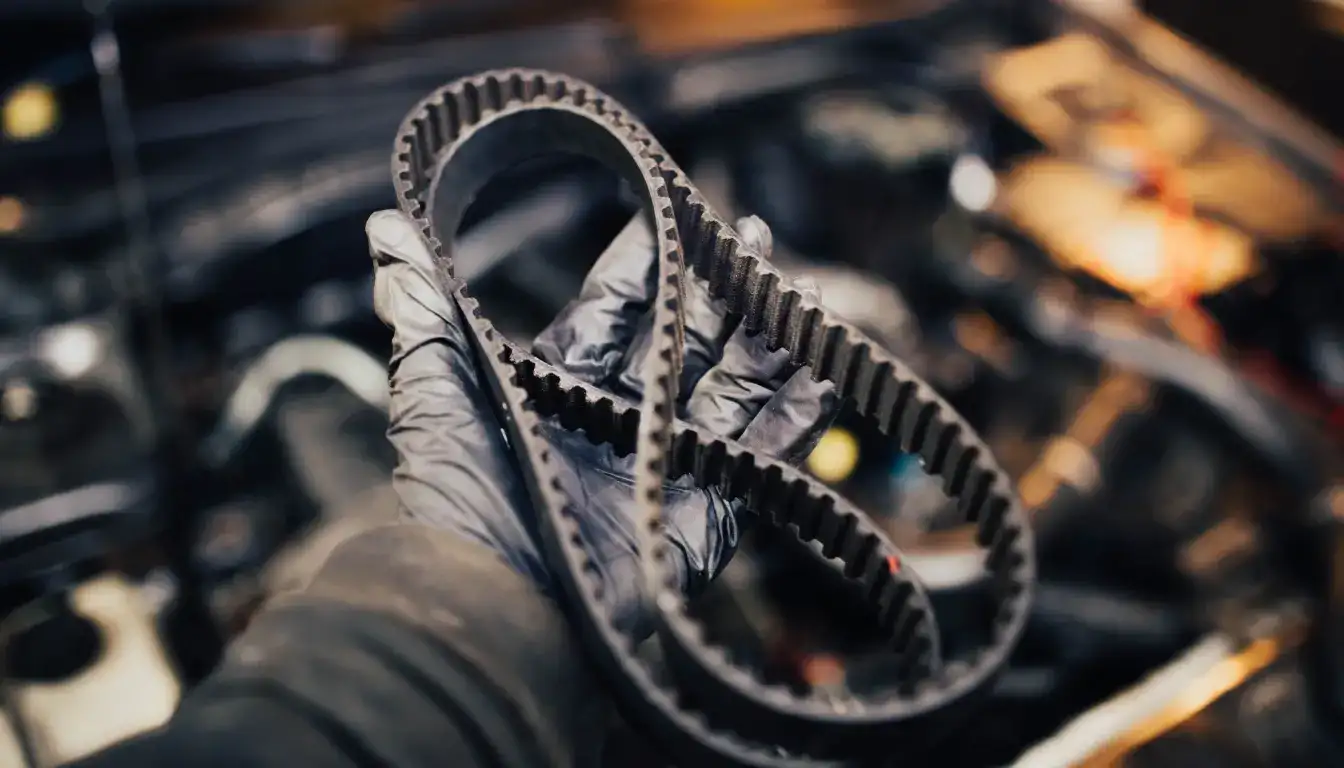
A serpentine belt is a single long, ribbed rubber belt that snakes around several pulleys at the front of the engine. Driven by the crankshaft, it powers accessories such as the alternator, the air conditioning compressor, and, on many engines, the water pump and a hydraulic power steering pump. One belt replaced the multiple V-belts that older engines used.
Because so many systems depend on it, a broken serpentine belt can stop a trip quickly. The alternator stops charging the battery, the air conditioning quits, and if the belt drives the water pump, the engine can overheat within minutes. On vehicles with hydraulic power steering, steering effort also increases sharply. For that reason, replacing a worn belt before it fails is far cheaper than a tow and a damaged engine.
Warning Signs Your Serpentine Belt Needs Replacement
Belts rarely fail without warning. Watch and listen for these signs:
- Squealing or chirping: A high-pitched squeal at startup, during sharp turns, or when the air conditioning engages often means the belt is slipping.
- Visible damage: Cracks across the ribs, missing chunks, frayed edges, or a shiny, glazed surface all call for replacement.
- Battery warning light: A slipping belt can stop the alternator from charging, which may trigger the battery light or cause dim headlights.
- Rising engine temperature: If the belt drives the water pump, slipping can reduce coolant flow and push the temperature gauge up.
- Weak air conditioning: A compressor that cycles poorly can point to a belt that is not gripping its pulley.
Here is the detail many guides miss. Most modern belts are made from EPDM rubber. EPDM, short for ethylene propylene diene monomer, is a synthetic rubber that resists heat and cracking far better than older neoprene belts. Instead of cracking, an EPDM belt wears like a tire, slowly losing rib depth until it slips. A technician uses a rib-depth gauge to measure that wear, which a quick visual check cannot detect.
DIY Serpentine Belt Replacement vs. Professional Service Compared
The right choice depends on your tools, your vehicle, and how much risk you are willing to accept. This comparison summarizes the trade-offs.
| Factor | DIY Replacement | Professional Replacement |
| Typical cost | Belt only, plus any tools you need to buy | Belt plus roughly an hour of labor |
| Time required | About one hour on accessible engines, longer for first-timers | Usually completed in a single short visit |
| Tools needed | Serpentine belt tool or breaker bar, routing diagram, flashlight | Shop tools, lifts, and stretch-fit installation tools |
| Tensioner and pulley check | Only as thorough as your own inspection | Inspected and tested as part of the job |
| Belt wear measurement | Usually visual only | Rib-depth gauge measurement |
| Accountability if it fails | You handle the redo | Shop warranty on parts and labor, where offered |
| Best for | Simple layouts with an automatic tensioner | Tight engine bays, stretch-fit belts, noisy pulleys |
Cost Breakdown: What You Actually Save by Doing It Yourself
Professional pricing for this repair is lower than many drivers fear. According to J.D. Power’s serpentine belt cost estimates, the average replacement runs between $109 and $134, with labor estimated at $57 to $72 and parts at $52 to $62. The belt itself typically costs between $25 and $75.
In practical terms, a DIY job saves roughly the labor portion, which is often less than $75 on a straightforward engine. If you need to buy a serpentine belt tool, part of that saving disappears on your first job. Meanwhile, if the tensioner or an idler pulley also needs replacement, costs rise for both DIY and shop work, but a technician is more likely to catch that need before the new belt goes on.
Prices vary by engine layout and parts quality. For a detailed look at what drives the final bill, see this breakdown of car serpentine belt replacement cost.
When DIY Serpentine Belt Replacement Makes Sense
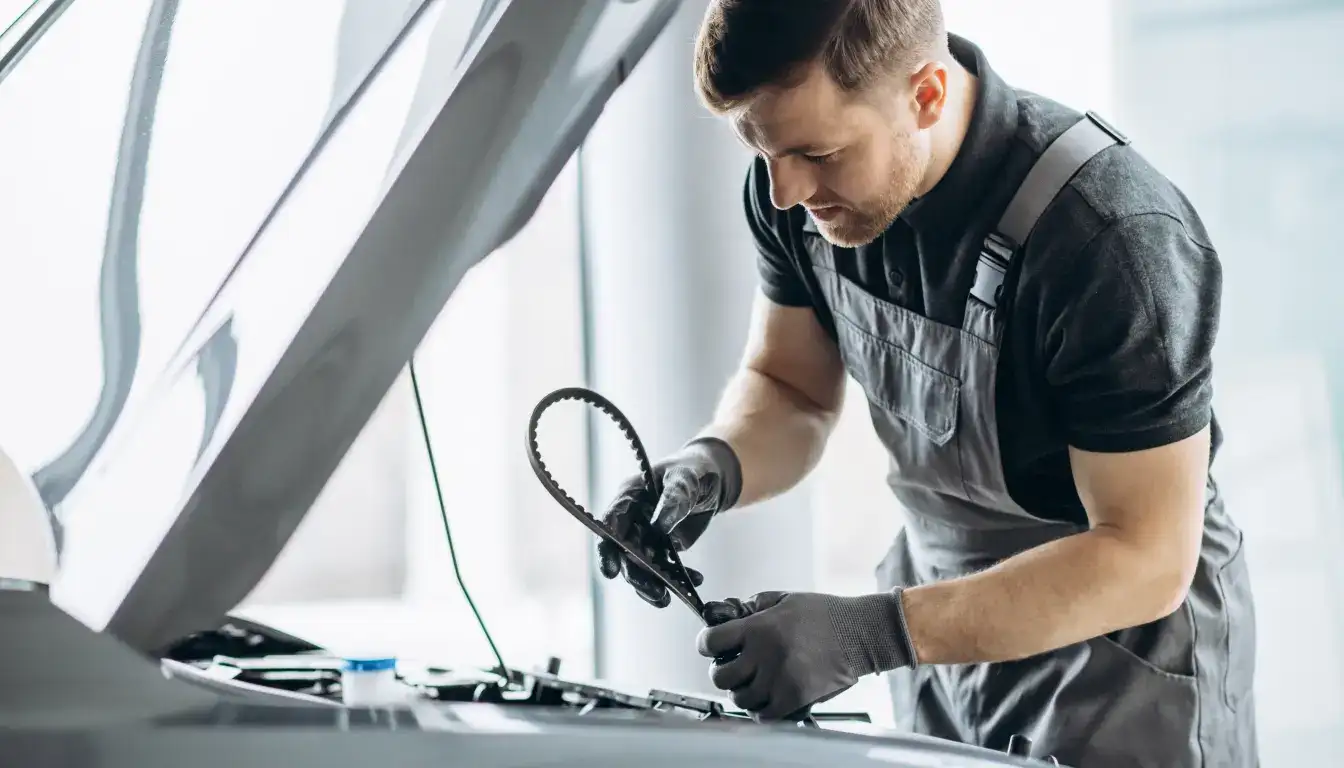
DIY serpentine belt replacement is a reasonable project when most of these conditions apply:
- Easy access: You can see and reach the full belt path from the top of the engine bay.
- An automatic tensioner: Your engine uses a spring-loaded tensioner rather than a stretch-fit belt.
- A clear routing diagram: A sticker under the hood or the owner’s manual shows the belt path.
- Healthy components: The tensioner and pulleys spin smoothly and quietly with no wobble.
- Basic tools and patience: You have a belt tool or breaker bar and time to double-check your work.
Most belt-driven systems use an automatic tensioner. An automatic tensioner is a spring-loaded arm with a pulley that presses against the belt to hold the correct tension as the belt wears and the engine heats up. When its spring weakens or its bearing wears, the belt can slip, squeal, or flutter, even if the belt itself is new.
How to Replace a Serpentine Belt Safely at Home
If your vehicle passes the checklist above, follow these steps:
- Let the engine cool and remove the key. Some electric cooling fans can switch on unexpectedly, so keep the key away from the vehicle.
- Photograph the routing. Even with a diagram sticker, a clear photo of the current belt path prevents mistakes.
- Release tension. Fit the belt tool or breaker bar on the tensioner and rotate it to slacken the belt.
- Remove the old belt. Slide it off the easiest smooth pulley first, then slowly release the tensioner.
- Inspect the drive system. Spin each pulley by hand and check for noise, roughness, or wobble, and look for oil or coolant leaks on the pulleys.
- Route the new belt. Follow the diagram, leaving a smooth pulley for last so you can slip the belt on while holding the tensioner back.
- Check rib alignment. Make sure every rib sits fully in each pulley groove and none overhangs an edge.
- Start and observe. Run the engine briefly, watch the belt track straight, and listen for squeals with the air conditioning on.
Take your time on step 7. A belt that sits one rib off on a single pulley can fly off or shred within a few miles.
When to Leave the Job to a Professional
Some vehicles turn a simple belt swap into a frustrating afternoon. Consider professional service in these situations:
- Stretch-fit belts: A stretch-fit belt has no tensioner and is installed under tension using a special tool. It cannot be reused, and installing one without the right tool can damage the belt or pulleys.
- Tight engine bays: Some transverse V6 engines require removing a wheel, a fender liner, or even supporting the engine to reach the belt.
- Noisy tensioners or pulleys: Grinding, rattling, or a bouncing tensioner arm means more than a belt needs attention.
- Overheating or warning lights: These symptoms may involve the water pump, alternator, or cooling system rather than the belt alone.
- Repeat failures: A belt that wears quickly or jumps off usually points to misalignment or a failing component that requires diagnosis.
Troubleshooting After a New Belt Goes On
Two problems send many DIYers back to a shop. First, a new belt that still squeals usually means a worn tensioner, a misaligned or seized pulley, or a belt that is one rib off. Belt dressing sprays can mask the noise briefly, but they do not fix the cause.
Second, a vehicle that will not start after a belt replacement is rarely caused by the belt itself. More often, a battery cable or connector was disturbed during the work, the battery drained while the key was left on, or the belt slipped off and jammed against another component. Check those items first, and if the cause is not obvious, have a technician diagnose it before repeated cranking drains the battery.
DIY Work and Your Vehicle Warranty
Many drivers worry that doing their own maintenance will void a factory warranty. Under the Magnuson-Moss Warranty Act, that is generally not the case. The Federal Trade Commission explains in its consumer alert on warranty restrictions that companies cannot void a warranty solely because you used third-party parts or did repairs yourself.
However, a manufacturer can deny coverage for damage caused by an incorrect installation or a faulty part. So if a misrouted belt leads to an overheated engine, that repair may not be covered. Keep receipts, use a belt that matches your vehicle’s specifications, and record the mileage of every replacement.
Belt Checks in Georgia Are Up to You
Some sources suggest Georgia does not require routine safety inspections for passenger vehicles. The only regular state testing is an emissions inspection, and the Georgia Clean Air Force county list shows it applies to 13 metro Atlanta counties, including Coweta County, home to Newnan. Troup County drivers in LaGrange are not part of that program, and even emissions tests do not check belts.
As a result, no one inspects your serpentine belt unless you or your technician does. Long, hot Georgia summers and heavy air conditioning use also put steady load on the belt drive. A routine multi-point inspection is an easy way to have the belt, tensioner, and hoses checked during regular service.
Serpentine Belt Service in LaGrange, GA
If your belt is squealing, your engine bay is tight, or you simply want the tensioner and pulleys checked with the belt, a certified technician can handle the job in one visit. Auto Gallery Chevrolet GMC at 1415 Lafayette Pkwy in LaGrange serves drivers across Troup County, Newnan, Columbus, and the I-85 corridor.
The certified service department uses manufacturer-specified parts and can measure belt wear with a gauge rather than guessing by eye. Before booking, check current service and parts specials for savings on maintenance. Call (706) 882-2576 to schedule your serpentine belt inspection or replacement, and keep your vehicle’s accessories running reliably.
Frequently Asked Questions
Is DIY serpentine belt replacement hard?
DIY serpentine belt replacement is manageable on engines with easy access and an automatic tensioner. With a belt tool and the routing diagram, many owners finish in about an hour. Stretch-fit belts and tight engine bays are better left to professionals.
How much does it cost to replace a serpentine belt?
Professional serpentine belt replacement averages about $109 to $134, including labor and parts, while the belt alone usually costs $25 to $75. Costs rise if the tensioner or pulleys also need replacement.
How do I know if my serpentine belt is bad?
Common signs include squealing at startup or with the air conditioning on, visible cracks or missing chunks, a battery warning light, and rising engine temperature. Modern belts can also wear without cracking, so a rib-depth gauge gives the most accurate answer.
Can I drive with a bad serpentine belt?
Driving with a worn belt is risky. If it breaks, the alternator stops charging, the air conditioning quits, and the engine may overheat if the belt drives the water pump. Replace a worn belt as soon as possible.
Should I replace the tensioner with the serpentine belt?
Replace the tensioner if it is noisy, rough, bouncing, or no longer holds steady tension. A worn tensioner can quickly damage a new belt, so inspect it every time the belt is replaced.
Why is my car still squeaking after replacing the serpentine belt?
A squeak after a new belt usually points to a worn tensioner, a misaligned or failing pulley, or a belt seated one rib off. Recheck the routing and spin each pulley by hand to find the cause.
Will replacing my own serpentine belt void my warranty?
No. Federal law generally prevents manufacturers from voiding a warranty just because you did the work yourself or used aftermarket parts. However, damage caused by incorrect installation may not be covered, so keep your receipts.
Disclaimer: Cost figures are national averages and vary by vehicle, engine, parts, and local labor rates. This guide is general information, not a substitute for your owner’s manual or a professional diagnosis. Contact Auto Gallery Chevrolet GMC for a vehicle-specific quote.

0 comment(s) so far on DIY Serpentine Belt Replacement Saves Labor, but Pros Catch More